Data Breaches
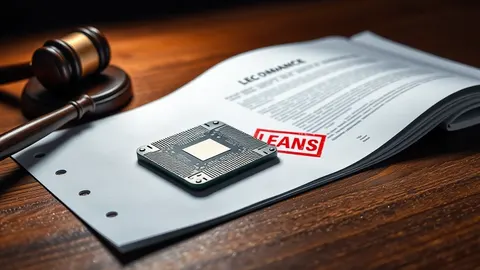
$2 Arm Verdict Delays 5-Year Royalty Pause Decision to Judge After License Breach
A Delaware jury found Arm breached its license with Qualcomm but awarded only nominal damages, leaving royalty penalties to a judge.
Data Breaches coverage from BitShield News holds 16 articles, 12 of them reference guides. The newest was published on October 18, 2026. New stories are added as soon as they are confirmed, from more than 150 sources checked as often as every 45 seconds. Each story lists its sources. Primary sources we follow for this section include IdentityTheft.gov (FTC) and FTC: Data Breach Response, A Guide for Business.
A Delaware jury found Arm breached its license with Qualcomm but awarded only nominal damages, leaving royalty penalties to a judge.

Extortion group n0n added 38 shipping and logistics targets to its leak portal, raising concerns about exposed port data across 18 countries.

Misclassified data creates blind spots that allow attackers to bypass security controls and exfiltrate sensitive information without triggering alarms.

Attackers rarely steal data to sell it; they steal it to hold your business hostage, exploiting configuration errors that standard security tools often miss.

Insurers demand specific technical controls before issuing a policy, turning security posture into a gatekeeper for financial protection against data breaches.

Role-based access control fails when permissions attach to people instead of defined job functions, creating hidden privilege creep that bypasses security controls.

A weak credential allowed unauthorized access to Denmark’s national register, exposing data for millions through a compromised IT partner account.

Officials warn unauthorized AI agents will likely bypass defenses, prompting calls for stricter reporting rules and infrastructure safeguards.

Privacy impact assessments reveal hidden data flows that standard security tools miss, preventing regulatory fines before they occur.

Full disk encryption on Linux protects data at rest by transforming storage into unreadable ciphertext, ensuring that physical theft of a drive yields zero usable information without the correct key.
Most database leaks occur not because hackers break encryption, but because administrators leave default ports open to the public internet.

Most file sharing breaches occur not because the transfer failed, but because the recipient’s environment lacked the controls to handle the file safely.

Standard expiration timers fail because attackers use valid tokens immediately, making device binding and short-lived tokens the only reliable defense against session hijacking.

Most exposed API keys originate from internal development workflows rather than external attacks, making source code hygiene the primary defense layer against credential theft.

Encryption at rest transforms stored data into unreadable ciphertext, ensuring that physical theft or unauthorized file access yields only useless noise to attackers.

Data masking hides real values with fake ones, allowing safe testing and sharing while keeping the original data secure and unusable by attackers.