Key points
- Intel’s D-series GPU features 480GB of LPDDR5X memory, surpassing current competitors.
- The hardware delivers 1.3 petaflops of FP8 performance and 1.5TB/s bandwidth.
- An eight-GPU cluster can support AI models exceeding one trillion parameters.
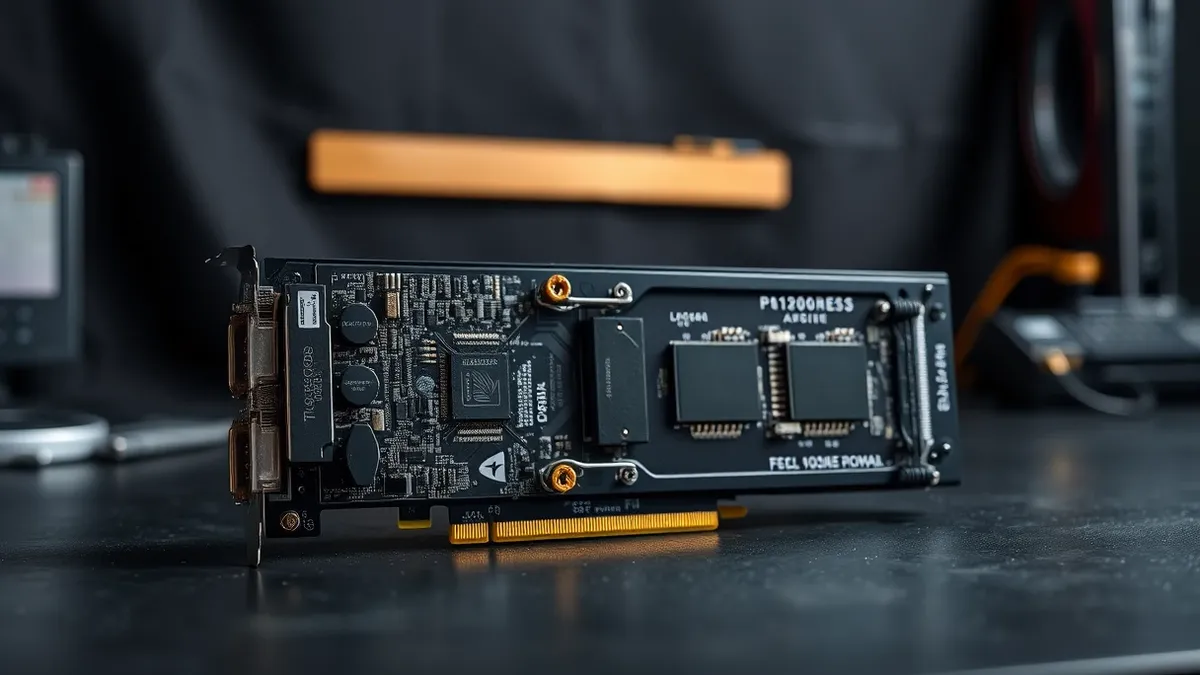
Intel announced a new graphics processing unit with 480GB of memory at the Open Compute Project Global Summit, targeting AI inference tasks. This D-series accelerator, formerly codenamed Crescent Island, uses LPDDR5X memory rather than GDDR7 or HBM3e. This choice prioritizes capacity and power efficiency for data centers. The device allows enterprises to run large language models locally without excessive energy consumption.
By the numbers
- 480GB: Total memory capacity on a single GPU, the highest in the industry.
- 1.3 petaflops: FP8 computing performance rating for AI acceleration tasks.
- 300 billion: Maximum model parameters supported on one card simultaneously.
What the figures mean
The 480GB capacity exceeds the 288GB found in Nvidia’s Blackwell Ultra B300, making it the leader in data center GPU memory. Intel states the card supports models up to 300 billion parameters alone. A system with eight GPUs can handle models over one trillion parameters. This setup benefits robotics, enterprise services, and lengthy prompt processing. The 1.5TB/s bandwidth ensures data moves quickly between memory and the processor.
What should you do?
Managed service providers should evaluate their current infrastructure for memory bottlenecks. Teams need to verify if existing power supplies can handle the 350W draw per card. Check compatibility with current server racks and cooling systems. Assess whether your client workloads actually require such large model sizes or if smaller cards suffice. Review vendor contracts for potential hardware refresh cycles.
Operational impact
Organizations must assess whether their data centers can support the physical and power demands of high-capacity accelerators. IT leaders should consult with facilities teams to verify power density limits and cooling capacity. Procurement teams need to evaluate total cost of ownership, including electricity usage. Engineering groups must determine if current software stacks support these new hardware architectures.
Background: Large language models
The difference between large language models and small language models lies in their parameter counts, training data volumes, and memory footprints. Large models handle complex, open-ended reasoning across many domains, while small models execute narrow tasks efficiently on local hardware with predictable latency and lower resource overhead.
What to do and how to stay safe: Intel
- Audit existing server power and cooling capacities to ensure they can support high-density hardware.
- Review current AI workloads to determine if larger memory capacities provide tangible performance gains.
- Monitor vendor announcements for pricing and availability details before committing to procurement.
- Test software compatibility with new hardware architectures in isolated environments before deployment.
Step-by-step guide: Shadow AI Explained: 8 Questions Answered for Secure Operations
General security guidance from the BitShield News newsroom. It is not confirmed advice from the organisations named in this story.
Frequently asked questions
How does the D-series compare to Nvidia's latest GPUs?
It offers more memory capacity than Nvidia's Blackwell Ultra B300, which has 288GB.
What type of memory does the Intel D-series use?
It uses LPDDR5X memory, which is common in laptops, instead of GDDR7.
Can a single card run very large AI models?
Yes, one card supports models up to 300 billion parameters.