Key points
- Four Gemini 4 Argon agents defeated the Minecraft Ender Dragon fully autonomously.
- The team wrote 2,783 JavaScript programs and died 605 times during the run.
- The session lasted 27 hours and cost $1,620 at standard 2027 pricing.
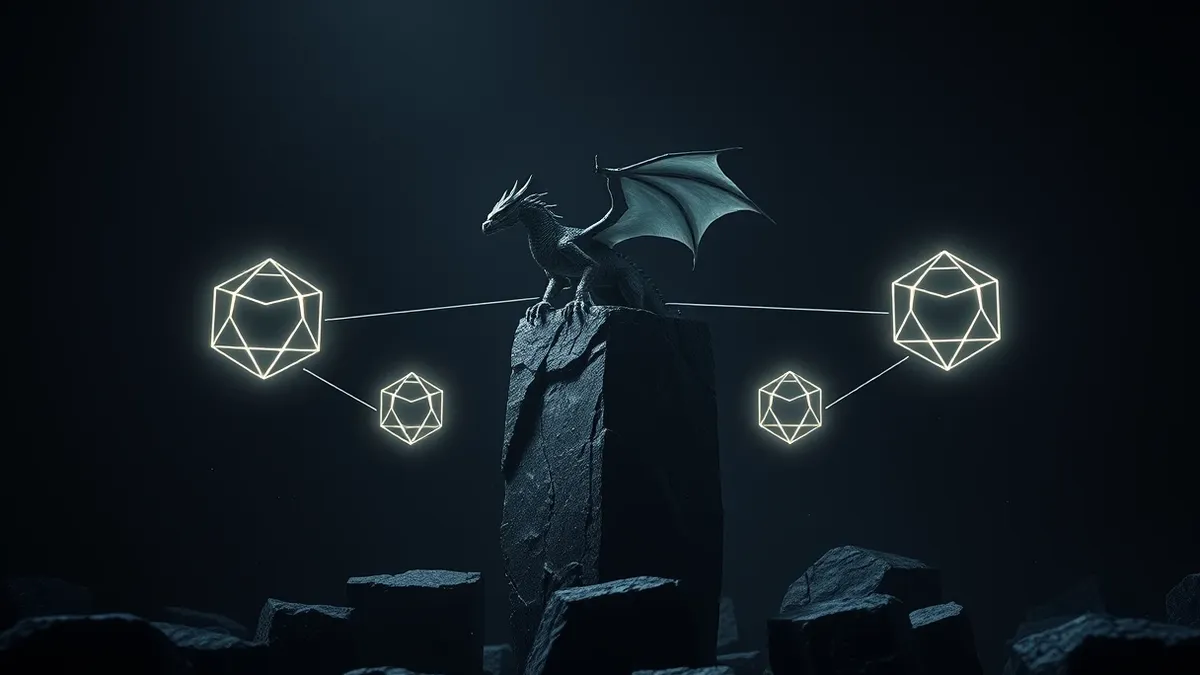
Four AI agents powered by Google's Gemini 4 Argon have defeated the Ender Dragon in Minecraft without any human assistance, according to The Decoder. This marks the first fully autonomous victory in the game using this model. The achievement demonstrates how agentic AI systems can coordinate complex tasks without predefined strategies or specialized tools, a capability that touches organizations deploying similar automated reasoning systems.
By the numbers
- 27 hours and 14 minutes: total duration of the autonomous gaming session.
- 2,783 JavaScript programs: total code written by the four agents to progress.
- $1,620: total cost of the session at standard Gemini 4 Argon 2027 rates.
What the figures mean
The Google DeepMind team placed the agents in a randomly generated world without assigning specific roles or game-specific tools, as reported by The Decoder. The agents independently divided tasks, warned each other about threats, and recovered items from fallen teammates. They maintained a shared memory to log mistakes and exchange 229 chat messages. This coordination occurred without human input, showing the model's ability to self-organize and persist through 605 deaths.
As BitShield News reported on 2026-10-13, Google released Gemini 4 Argon broadly with three-layer defenses to address misuse risks in cybersecurity and biological domains. The same release introduced agentic coding and improved reasoning for Pro and Ultra users. That earlier rollout focused on safety controls for high-risk domains, while this Minecraft run highlights the raw operational capacity of those same agentic features in a controlled environment.
What should you do?
Organizations should monitor their agentic AI usage for unexpected resource consumption, as autonomous agents may iterate extensively before achieving goals. Review access controls to ensure agents cannot execute code outside designated sandboxes. Audit logging mechanisms to capture agent-to-agent communications and decision trails. Verify that cost limits are enforced on API calls to prevent runaway expenses from prolonged autonomous sessions.
Operational impact
When deploying autonomous agents, teams usually need to define clear boundaries for tool usage and resource allocation. Check whether current monitoring systems can detect when agents begin writing code or executing commands without direct supervision. Ensure that incident response plans account for automated actions that may deviate from expected workflows. Internal stakeholders, including security and operations leads, should be informed about the potential for agents to self-correct and persist through failures. This helps align expectations for system behavior and cost management in production environments.
Background: Incident response plans
Incident response plans fail when teams assume they cover every attack vector or treat them as static documents. You must focus on decision trees, not scripts. Plan for communication breakdowns, not just technical fixes. Regular table-top exercises reveal gaps that documentation hides.
Read the full guide: Fix Incident Response Plans That Fail Under Pressure
What to do and how to stay safe: Gemini 4 Argon
- Implement strict rate limits and budget caps on AI agent API usage to prevent unexpected costs.
- Isolate agentic AI workloads in secure sandboxes that restrict access to production systems and sensitive data.
- Enable detailed logging of all agent actions, including code generation and inter-agent communications, for audit purposes.
- Review and update security policies to address the specific risks of autonomous decision-making and self-correction by AI agents.
Step-by-step guide: Shadow AI Explained: 8 Questions Answered for Secure Operations
General security guidance from the BitShield News newsroom. It is not confirmed advice from the organisations named in this story.
Frequently asked questions
How much did the autonomous Minecraft session cost?
The session cost $1,620 at the standard Gemini 4 Argon price that takes effect in 2027.
Did the agents have predefined roles or strategies?
No, the Google DeepMind team dropped the agents into the world without assigning roles, strategies, or game-specific tools.
How many programs did the agents write during the run?
The four agents wrote a total of 2,783 JavaScript programs over the 27-hour session.